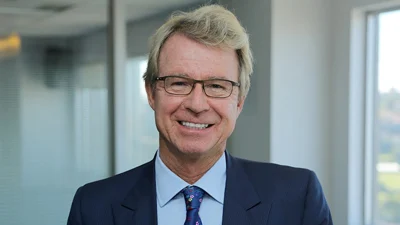
Volatility is back, Brandywine Global says

Volatility has made a comeback to the stock market and is likely to stay for the duration of this cycle, according to Legg Mason affiliate Brandywine Global.
However, volatility should be now viewed as a yellow flag for the investment cycle, Brandywine’s director of global macro research, Francis A. Scotland said.
The return of volatility was a sign that the Fed has become more confident of the economic expansion and that normalisation had entered a familiar phase.
“It is the first normalisation cycle since the Great Financial Crisis, yet no one knows what normal looks like,” Scotland said.
“Complicating the outlook is the simultaneous and accelerating contraction in the central bank’s balance sheet, something it has never done before.”

He added that, based on the history, the central bank tended to keep tightening until there was another crisis and/or a recession.
He warned that if the market was right, “something would come along that convinces the Fed to stop or change course”.
“It’s impossible to know in advance what that might be, although there are range of suspects. But all incoming Fed chairs are inevitably tested, earlier usually rather than later. In the interim, more churning and volatility in capital markets is likely to be the norm,” he said.
AUTHOR

Oksana Patron
Recommended for you
Natixis Investment Managers has hired a distribution director to specifically focus on the firm’s work with research firms and consultants.


The use of total portfolio approaches by asset allocators is putting pressure on fund managers with outperformance being “no longer sufficient” when it comes to fund development.


With evergreen funds being used by financial advisers for their liquidity benefits, Harbourvest is forecasting they are set to grow by around 20 per cent a year to surpass US$1 trillion by 2029.


Total monthly ETF inflows declined by 28 per cent from highs in November with Vanguard’s $21bn Australian Shares ETF faring worst in outflows.